
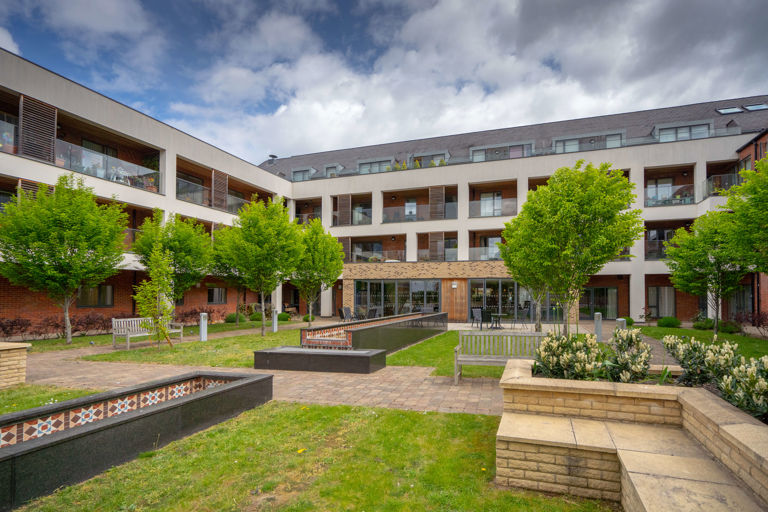
We’re committed to making sure your estate and your shared areas are safe, well maintained, clean and tidy, and sustainable.
We know how important your estates services are to you and we’re working hard to make sure we deliver the best service possible to all our customers. We’re working closely with our contractors to make sure they keep to the standards outlined within their contracts and our own in-house teams meet their specification. We’re also carrying out more estate inspections to check they meet these standards.
You can find out more below about what services you can expect, which contractors cover your area and who the Contract Manager for your area is. You can also find a handy FAQ section where we answer some of the questions you ask most often, including details of what our estate services contracts cover. We’ve also got a leaflet which outlines your estate services.
|
Area |
Contract |
Contact |
|---|---|---|
|
East North |
Grounds Maintenance: Nurture Landscapes |
Contract Standards Manager - Rebecca Cox |
|
East South |
Grounds Maintenance: The Ground Care Group |
Contract Standards Manager - Rebecca Cox |
|
Kent North |
Grounds Maintenance: Nurture Landscapes Communal Cleaning: Cleanscapes Ltd Window Cleaning: NSS Maintenance |
Contract Standards Manager - Katy Read |
|
Kent South |
Grounds Maintenance: Nurture Landscapes |
Contract Standards Manager - Katy Read |
|
East Sussex |
Grounds Maintenance: Southern Land Services |
Contract Standards Manager - Katy Read |
|
West Sussex |
Grounds Maintenance: Southern Land Services |
Contract Standards Manager - Katy Read |
|
Surrey |
Grounds Maintenance: Southern Land Services |
Contract Standards Manager - Katy Read |
|
Bexley |
Grounds Maintenance: Southern Land Services |
Contract Standards Manager - Craig Hoskins |
|
Midlands (North, East, Central) |
Grounds Maintenance: Fourth Corner |
Contract Standards Manager - Raheem Basharat |
|
Midlands (South and West) |
Communal Cleaning: Interclean Estate Management Services |
Contract Standards Manager - Joe Connelly |
|
Area |
Contracts |
Contacts |
|---|---|---|
|
Bexley |
Communal cleaning Bulk removal |
In-house team leaders - David Izod, David Robinson and John Chalk |
|
Kent, Surrey and Sussex |
Communal cleaning |
In-house team leader - Ryan Jones |
|
Midlands (Stratford) |
Communal cleaning and grounds maintenance |
In-house team leaders - Faye Hook, Lucy Newman, and Neil Ainsworth |
|
Midlands (Central) |
Grounds maintenance |
In-house team leaders - Faye Hook, Chloe Curtis-Dunn, Lucy Newman, and Neil Ainsworth |
|
East |
Grounds maintenance |
In-house team leader - Nic Galloway |
|
Midlands (North and East) |
Grounds maintenance |
In-house team leader - Chloe Curtis-Dunn |
Our grounds contractors visit most of our sites 26 times in a year, but some areas have 24 visits per year. This means they will carry out two visits per month, with about 15 days between each visit.
During the visits, we carry out the work below:
We mainly work on shrub beds during winter. During the summer, we carry out containment pruning on shrubs where it’s needed, where we only trim them back enough to fit in their given space. This means flowering shrubs can reach their full potential.
All cleaning is usually carried out at least every two weeks. There may be some changes to this where there is an on site cleaner, or if we’ve agreed other arrangements with you for an additional service charge.
Fortnightly cleaning generally includes:
Communal Window cleaning for rented homes and leaseholders
Only outside communal windows we can reach are included in this service. These are delivered by a ‘reach and wash’ method every other month. They include the following areas:
We clean all windows in Later Living, Extra Care and Supported Living homes. We can include any conservatories or glass roof areas by arrangement. We clean the glass and frames of external windows, and window ledges, where we can reach them.
We try our best to carry out these tasks as planned. However, issues such as bad weather might cause delays or changes to services.
We care about the standard of the estates where you live. It’s our aim that you can be proud of the place you call home. We work together with you and our partners to achieve our estate standards, which we organise into four key pillars: safe, well maintained, clean and tidy, and sustainable.
The Contract Standards manager will inspect some of the estates within three working days after a maintenance visit. We aim to inspect at least at least 10% of sites each month. The contractor themselves will self-audit 10%. Each estate will be scored as follows:
Green - the estate has met all key standards, with only minor issues, if any.
Amber - the estate has met most standards, but certain areas need improvement. These areas should improve by the next planned visit.
Red - the estate hasn’t met our standards. Partners will need to carry out a visit within five working days that fixes the issues highlighted.
Our partners must visit estates in line with the agreed quarterly schedule. If an estate is missed or cancelled, our partners must tell us as soon as they can and reschedule the visit to take place within five working days. Due to scheduling, work may not be on the same weekday visit.
If an estate is classed as red, our partners must visit and fix all issues flagged within five working days.
There must be no more than three complaints upheld per month (2% of estates at award). Upheld means a situation where the complaint is investigated and our partner is found accountable for a service delivery failure.
We have a number of trees in our communal areas.
We have to maintain these trees to make sure they are safe and not causing issues or damage. We have a specialist team who manage our tree maintenance programme.
We generally survey our trees on a three-year cycle. This means the team visit every estate and check all trees to make sure they are safe across a three-year period. There are a small number of estates and individual trees which need to be checked more often because of where they are (eg. near a building). We also identify any trees from neighbouring land which hang over into our land.
When a tree is surveyed, we look at whether any work is needed and in what timeframe, prioritising work based on risk and need. We look at safety, removing deadwood or dead trees that could cause harm. We also ensure there is the right amount of space between trees and buildings, pavements, roads, lamp columns, and road signs.
Find out more about tree maintenance in our Frequently Asked Questions section.
If you think there is a tree on your estate that looks dangerous and potentially poses a risk, let us know by filling in our tree form. Please upload photographs to the form so we can see the condition of the tree.
For trees in customer gardens, please first contact your Neighbourhood Manager.
Please don't plant bamboo in your garden. Bamboo can spread very quickly through underground roots, making it difficult to control. It's also expensive and time consuming to remove. This can lead to damage to yours or other people's homes, gardens, fences, paths and patios.
If you notice any issues with bamboo in your garden or around the outside of your home, please report it to us as soon as possible.
How can I see what areas you are responsible for maintaining on my estate?
You should have an up-to-date copy of your estates map on your communal noticeboard. If your noticeboard doesn’t have a map, please email us at EstateServices@orbit.org.uk and we’ll arrange for one to be added.
How do I know when to expect gardeners, cleaners and window cleaners?
The posters on your communal noticeboard will tell you how often you can expect these visits. This includes if there’s a specific day that gardeners, cleaners and window cleaners will visit.
If your notice board doesn’t have a poster, please email us at EstateServices@orbit.org.uk and we’ll arrange for one to be added.
Grounds Maintenance visits generally take place fortnightly, with a four-week gap over the Christmas period. Cleaning is generally completed fortnightly unless you live in one of our Later Living schemes, where it’s done more often. Communal window cleaning is completed every two months.
What happens when areas of grounds are missed, such as tucked away areas or alleyways?
We may not tend to these areas on every visit, but we check them regularly to ensure there isn’t a build up of weed growth, leaf debris, litter or overgrown plants.
Who removes leaf debris from hedge cutting or grass left on footpaths after mowing?
Grass on footpaths will be removed or may be blown back onto grass areas. Sometimes small amounts of leaf debris will be blown back into shrub beds and hedgerows to act as a natural mulch, but generally any excess debris will be removed. We’ll always ensure pathways and walkways are cleared of fallen leaves as a priority when our partners visit.
Who removes fallen leaves and leaf debris in the autumn?
We aim to remove all fallen leaves on each visit during the autumn. If there are too many leaves to take away, the leaves will be blown into piles to be removed on a future visit. Our partners will prioritise areas where there are footpaths, car park areas and access routes.
Why do I see the grounds maintenance operative or cleaner on their mobile phone?
They need to take photos of the areas where they’ve delivered a service, so they use their mobile phones to take the photos and upload them into an app. They also log in and out of the app to record the time taken on each estate.
What happens if my estate is missed? When can I expect a service?
If your visit is missed, our partners will visit within five working days of the original planned visit instead. This is set out in our partners’ contracts.
What water is used to clean floors and how often is it changed?
Fresh clean water is used daily for each cleaning task. The water should be changed after a maximum of three floors, depending on size.
Is the cleaning of mirrors and windows included, and how often are they cleaned?
The cleaning of internal communal windows is included. They should be cleaned six times a year, although internal lift mirrors should be cleaned each visit. Windows are checked during maintenance visits and cleaned as needed.
What happens if rubbish is left in communal corridors instead of the bins?
We encourage all customers to place household waste in their household or communal bins. If you’ve got large items to get rid of, you should be able to arrange for your local council to collect this.
When rubbish is left in communal areas, the cleaners will remove this. However, if we find large items, or customer belongings, our Neighbourhood team will place a notice on the item saying that it must be removed, or if it’s an urgent health and safety hazard the item may be removed without warning.
We then arrange for our partners to remove and dispose of the items. The cost of removal is then recharged to customers via the service charge if we can’t find out who threw the item away.
You can find out more about our ‘keep it clear’ policy here.
There’s a tree on my estate that looks damaged or dangerous. How can I tell you about it?
If there’s a tree on your estate that looks dangerous and potentially poses a risk, you can let us know by filling in our tree form. You can also upload photographs to the form so we can see the condition of the tree.
What happens if the tree I am concerned about is not on your's (Orbit's) land?
You can report this directly to your local council. If we have concerns about the safety of a tree on land that isn’t ours, we will contact the landowner and ask for it to be dealt with.
Who is responsible for the tree in my garden?
Under the terms of your tenancy, any trees in your own garden are your responsibility to maintain.
How do you know if a tree has a Tree Preservation Order (TPO)?
Before we work on any trees, we check with the local council to see if the tree has a TPO. We’re working to include this information on our own tree mapping database in the long term. If a tree does have a TPO, we must get permission from the local council before we do any work, as the tree is protected.
A tree is taller than my house and sways in the wind. Is it safe?
To manage the risks from our trees, and in line with national guidance, we inspect each tree once every three years to make sure it is safe. Our estate workers also undertake regular checks of trees during site inspections or after strong winds.
Trees naturally move in windy conditions, flexing their trunk and moving their branches. A tree being large or tall doesn’t mean it is dangerous or more likely to fail than a smaller tree.
We measure the risk of each tree based on its unique condition, health, location and any other local factors (such as soil condition) which may affect it.
I’m worried about the trees near my home because bad weather's been forecast. What should I do?
It is natural for trees to move in high winds and small or dead branches to fall. However, in bad weather sometimes larger branches may break off or trees may fall over. It is important you do all you can to remain safe during bad weather. If you can, stay indoors until the storm has passed. If you do need to go outside, try not to walk under trees or through woodlands. Consider where you park your car and avoid parking under the canopy of a tree.
It is incredibly rare for trees to fall onto buildings, but if you have trees close to your home and you are concerned about them falling, try to stay in rooms on the opposite side of the building and try not to sleep in rooms directly under the roof. If you see trees starting to lift out of the ground, the trunk or branches starting to split, or are concerned a tree will fall on your home, call us.
For smaller scale damage to trees, such as trees or branches that have fallen in open space, report them to us via our tree work application form.
Is there a law about the height of hedges?
Yes. Since 1 June 2005 the High Hedges Act has given people living next to high hedges a way to resolve hedge height complaints. If we own land that a tall hedge is on, please report it via our tree work application form. If the hedge is privately owned, please contact your local council. There may be a cost for the council to investigate your complaint. There’s more information about high hedges on the government’s website.
What can I do about trees overhanging into my home’s boundaries?
We try to make sure there’s a two-metre (2m) gap from overhanging trees to residential structures (such as houses, garages, etc.) as part of our maintenance programme. If the trees overhanging your boundary are within 2m of your home, garage or other building, please report this via our tree work application form.
We won’t cut back branches of trees that overhang a boundary but are further than 2m from a residential structure unless there is a health and safety concern.
You do have the right to cut back overhanging branches to your boundary line yourself, provided the trees are not protected with a Tree Preservation Order or they’re not in a conservation area. You must carry out any work on the tree from your side of the boundary unless you have permission to enter your neighbour’s land. Unless you have the tree owner’s consent, you must not remove any part of the tree on their side of the boundary, including reducing the height of the tree. You are responsible for the full cost of the work, not the tree owner.
We recommend being careful and taking advice from a tree care professional if you are concerned.
My TV reception is being blocked by the tree(s). Can it be pruned/removed?
Tree owners don’t need to prune a tree because of interference with TV reception. In most cases, you can fix the problem by moving the aerial or dish.
A TV licence does not give the holder a guaranteed right to digital or satellite reception. There are no legal rights to TV reception in general, so we cannot prune back or remove trees to improve TV reception. You can find advice on dealing with tree-related reception problems on the BBC’s website.
A tree is interfering with my telephone line. What should I do?
If your phone line is being disrupted, contact your telephone network provider, who will be able to investigate. It is your telephone service provider’s responsibility to maintain your phone service.
Pruning is a temporary solution, and the problem may happen again when branches grow back.
The tree(s) outside my home block light to my house or garden, or they're blocking my view. Can they be removed or pruned?
In law, there is no automatic right to light or a view, either on your land or in your home. Trees growing is part of their natural lifecycle.
While we fully appreciate this is a frustrating situation for you, we can’t carry out tree works to clear your view or to allow light to better reach your land or home.
You may be able to trim back branches if they’re overhanging on to your home boundaries. See the question above about overhanging branches and home boundaries for more information.
The leaves/seeds/sap make a mess when they fall onto the pavement. Can the trees be removed/pruned?
We have a duty to keep pavements in good physical condition. However, the person living in a home is responsible for cleaning the pavements in front or back gardens, whether they’re ours or in private homes.
The sticky sap is often referred to as honeydew. This is a sugar solution produced by aphids. While it doesn’t look nice, it doesn’t damage paintwork. We won’t do anything to control aphids, as they are an important part of the food chain.
Tree owners don’t have an automatic responsibility to prune or fell the tree or clean cars because of sap, leaves, pollen, seeds or fruit.
We generally won’t remove any tree unless it has a certain level of disease, decay or is causing structural damage. This must be assessed and confirmed by a qualified arboriculturist (tree professional).
Can you prune or remove trees as their pollen is causing hay fever or allergies?
We won’t prune or remove trees due to pollen causing hay fever or allergies.
I am concerned about tree roots damaging foundations, paving, walls, fences or drains. What should I do?
If you are an Orbit customer, please report any damage through the Customer Hub. Our estates team will assess the damage, speak to our insurers in the case of subsidence (the sinking of land or foundations) and carry out remedial works if they are needed.
If you are a private homeowner and believe a tree we own is causing damage to your home, please report this via our tree works form.
If you are a private homeowner and experiencing subsidence, speak to your insurance company. They will arrange for professional reports and monitoring to prove that the trees are the cause of the damage.
Why can’t you ‘top’ (reduce the height of the trees) outside my house?
‘Topping’ is an outdated practice that the industry doesn’t accept, for several reasons:
We will only reduce the height of trees for health and safety reasons. Any height reduction we carry out will follow industry best practice and will only be to reduce any risk the tree poses.
For more information about your local area, you can visit our 'Your Neighbourhood' page:
